

How AI Technologies Are Revolutionizing Customer Experience in 2024
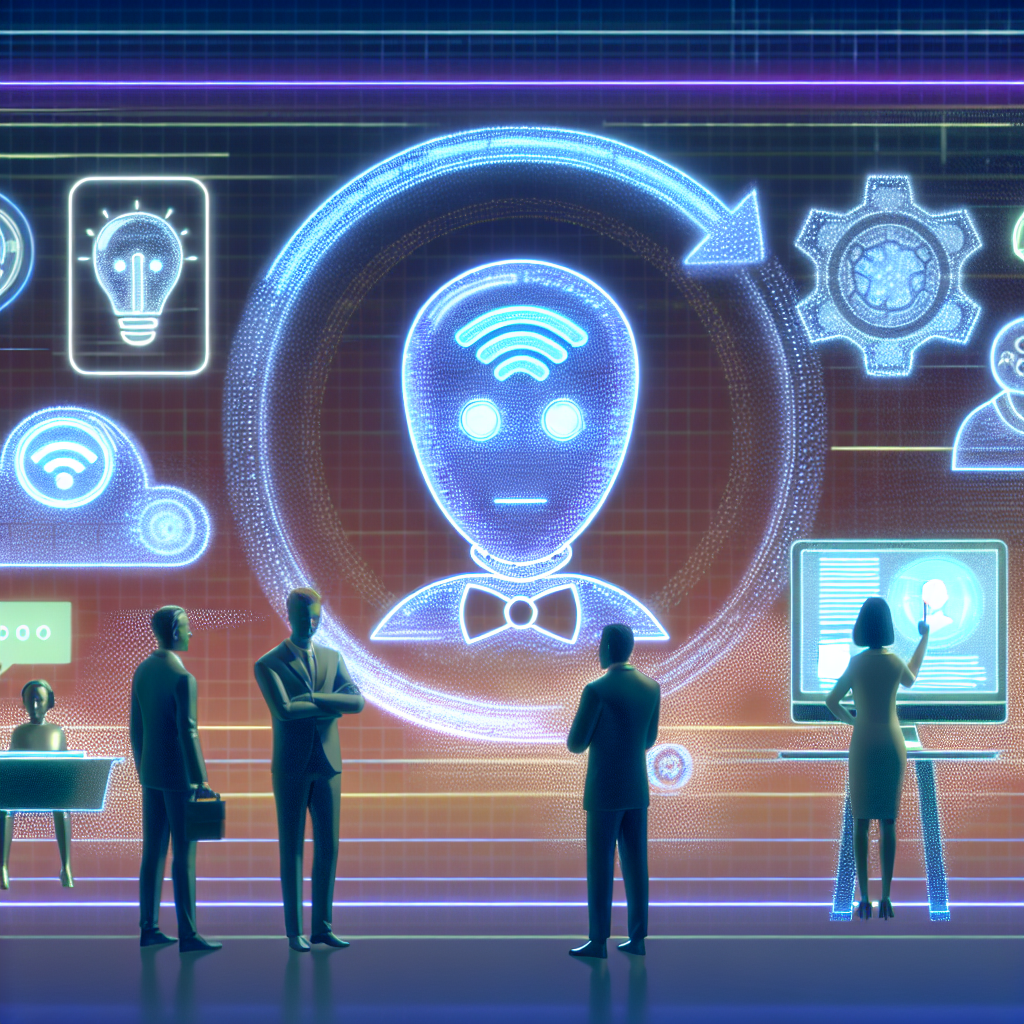
In 2024, artificial intelligence is redefining customer service
As generative AI matures and AI agents become more autonomous, businesses large and small are tapping machine learning to create hyper-personalized, 24/7 customer experiences. From smarter chatbots to predictive service models and emotion-aware AI, the customer experience landscape is undergoing a tectonic shift. If you’re not riding this AI wave, you’re risking irrelevance.
In this article, we dive deep into how today’s breakthrough AI technologies are transforming the frontlines of customer engagement—and what it means for your business.
Table of Contents
- What’s Driving the AI Customer Experience Revolution?
- Key Technologies Behind AI-Enhanced Customer Service
- How Major Brands Are Using AI to Wow Customers
- Opportunities for Small and Mid-Sized Businesses
- Risks and Ethical Considerations
- Future Trends: What’s Next in AI-Powered CX?
- Toolkits and Strategies for Implementation
- Final Takeaways
What’s Driving the AI Customer Experience Revolution?
In a post-pandemic, digitally-driven world, customer expectations have skyrocketed. People want instant responses, personalized offers, and smooth digital interactions across every touchpoint. A 2023 McKinsey report found that companies that personalize customer experiences across digital channels see revenue growth 40% faster than those that don’t.
Enter AI: specifically, generative AI, large language models (LLMs), and customer-focused automation. Tech giants like OpenAI (with ChatGPT and GPT-4), Google DeepMind (with Gemini), and Anthropic are pushing out tools that make human-like customer engagement scalable—at near-zero marginal cost.
This sharp jump in CX-focused AI is a response to:
- The explosion in consumer data availability
- Advances in NLP (Natural Language Processing)
- Cost-effective AI deployment through APIs like OpenAI and Google PaLM
- Pressure on businesses to deliver more value with fewer resources
Key Technologies Behind AI-Enhanced Customer Service
Let’s break down the leading AI technologies spearheading this transformation:
a. Generative AI & LLMs
Tools like OpenAI’s GPT-4 Turbo, Anthropic’s Claude, and Google’s Gemini are enabling human-sounding responses across customer service platforms. These models understand context, remember conversation history, and can securely handle sensitive data (like account info and transactions).
b. Sentiment Analysis & Emotion AI
Companies like Affectiva, Hume AI, and Microsoft have developed emotion-aware AI that detects tone, mood, and frustration levels. These tools allow businesses to better de-escalate issues—or delight customers proactively.
c. Autonomous AI Agents
Beyond chatbots, autonomous AI agents can independently complete tasks, file customer support tickets, issue refunds, or update account details based on pre-set permissions. Salesforce’s Einstein GPT is creating end-to-end customer experiences with minimal human interaction.
d. Predictive Analytics
Machine learning platforms like Amazon Personalize, Adobe Sensei, and IBM Watson CX use historical customer behavior to suggest next-best actions: upgrade offers, retention promos, or delivery updates before the customer even asks.
How Major Brands Are Using AI to Wow Customers
Amazon: Predictive Ordering and Intelligent Assistant Alexa
Amazon uses deep AI models that combine browsing, purchase, and delivery data to anticipate customer needs––sometimes dispatching products before the customer clicks ‘Buy.’
Alexa’s latest upgrade includes emotion-sensing responses using vocal inflections—making it more human-like and empathetic.
Delta Airlines: Real-Time Customer Support With AI
Delta leverages AI-powered agents to handle over 75% of its incoming support requests. The system accesses flight statuses, loyalty points, and booking changes—all within a seamless voice/text interface.
Sephora: Personalized Beauty Recommendations
Sephora’s AI features analyze skin tone, age, style preferences, and past searches to deliver real-time makeup suggestions. Their AI chatbot even recommends skincare routines in context (e.g., hot weather travel).
These case studies show one trend: AI isn’t just automating CX—it’s enhancing it in ways humans can’t match at scale.
Opportunities for Small and Mid-Sized Businesses (SMBs)
You don’t need a multimillion-dollar AI R&D budget to participate.
a. Plug-and-Play AI Tools
- ChatGPT’s custom GPTs for tailored customer support
- Freshworks Freddy AI: Affordable automation for SMBs
- Intercom Fin AI: Fine-tuned LLMs for startup-grade CX
b. Customer Segmentation & Retargeting
AI tools like Klaviyo, Zowie, and Levity help SMBs trigger smart email flows, bots, and product recs based on detailed psychographics without manual setup.
c. AI for Local Businesses
Think AI is only for eCommerce? Local plumbing or HVAC services are now integrating AI scheduling bots to let customers book online 24/7, reducing missed calls and boosting revenue.
Risks and Ethical Considerations
While AI is enhancing CX, it also presents new challenges.
- Data Privacy: Training AI models on sensitive customer data raises concerns about leaks, especially after major incidents like the Samsung GPT data breach.
- Bias in Recommendations: Poorly trained models may stereotype or neglect underrepresented customers.
- Dehumanization of Service: Replacing human agents entirely can alienate customers who seek empathetic problem-solving beyond what AI currently offers.
To mitigate risks, businesses must audit AI tools regularly, maintain human oversight, and maintain transparency with their customers.
Future Trends: What’s Next in AI-Powered CX?
Here’s where this is all headed:
- Hyper-personalization at Scale: AI will soon use real-time behavior to adapt sites or apps as customers interact—unique UI for each visitor.
- AI Curation Networks: Imagine customer support agents being trained on thousands of other interactions, best practices, and tone optimization via AI—this is already in pilot at Microsoft.
- Voice & Multimodal CX: Customers will begin interacting with brands not via clicks, but spoken prompts and visuals—picture AI-generated video summaries of your bank statements or insurance claims.
Expect also a rise in cross-platform AI experiences. For example, your Uber AI agent remembering your Starbucks order and adjusting ETA for the pickup.
Toolkits and Strategies for Implementation
Ready to explore AI for your customer experience roadmap?
Here are some tried-and-tested tools:
- ChatGPT Plugins – Build a virtual customer assistant in days.
- Zapier AI – Automate cross-platform customer workflows.
- Tidio and Drift – For sleek, chatbot-powered B2B/B2C experiences.
- Google Dialogflow – For intelligent voice and chat integration.
And here’s a streamlined strategy:
- Define Customer Touchpoints That Matter (Email, Chat, Website, Phone).
- Choose One AI Tool for Each (e.g., Intercom Fin for Chat, Zapier AI for Email).
- Train the System with Real Conversations.
- Roll Out in Phases + Monitor KPIs (First Response Time, CSAT).
- Keep a Human-In-The-Loop for Escalation.
Final Takeaways
AI technologies have crossed the tipping point from experimental to essential. As customer expectations grow and attention spans shrink, efficient, predictive, and personalized customer experience is no longer a luxury—it’s survival.
Whether you’re a Fortune 500 or a corner bakery, 2024 is the year to reimagine your customer touchpoints using AI—because someone else already is.
If you speak the language of your customer with empathy, intelligence, and speed—AI becomes your most powerful sales and retention rep.
Welcome to the era of AI-powered customer love.
For more insights into how AI is shaping business across industries, check out our latest features on CompaniesByZipcode.com.