

- Home
- Business Services
- Blog
- Contact Us
Build Zip Code Sales Lists: Maximize Local Outreach ROI
- Uncategorized
-
Jan 29
- Share post

Optimize Geo-Targeted Sales Lists to Boost Outreach Efficiency
In the competitive landscape of sales and marketing, building targeted sales lists by geographic area is essential for maximizing outreach efficiency. This article will explore the significance of geographic targeting in lead generation, the steps to create effective sales lists, and strategies to optimize sales territory management. Readers will learn how to leverage geographic segmentation to enhance their marketing efforts and improve return on investment (ROI). Many businesses struggle with inefficient outreach methods that fail to connect with the right audience. By implementing targeted sales lists, companies can streamline their marketing efforts and achieve better results. This guide will cover the importance of geographic sales targeting, the process of building sales lists using zip code data, and the tools available to facilitate local business lead generation.
Why Is Geographic Sales Targeting Crucial for Effective Lead Generation?
Geographic sales targeting is vital for effective lead generation as it allows businesses to focus their marketing efforts on specific regions, enhancing the relevance of their outreach. By understanding the local market dynamics, companies can tailor their messaging and offerings to meet the unique needs of different geographic areas. This targeted approach not only improves ROI but also enhances lead qualification, enabling businesses to connect with potential customers more effectively.
How Does Geographic Segmentation Improve Sales Outreach ROI?
Geographic segmentation significantly improves sales outreach ROI by allowing businesses to allocate resources more efficiently. By targeting specific regions, companies can increase conversion rates and reduce marketing costs. For instance, businesses that focus on local markets often see higher engagement levels, as their messaging resonates more with the audience. Studies have shown that targeted campaigns can lead to conversion rates that are up to 30-50% higher than non-targeted efforts, depending on the industry and campaign specifics.
What Key Geographic Entities Define Local Market Segmentation?
Key geographic entities that define local market segmentation include zip codes, census tracts, and demographic data. Zip codes provide a granular view of customer distribution, allowing businesses to identify high-potential areas. Census tracts offer insights into population density and socio-economic factors, while demographic data helps in understanding the characteristics of potential customers. By analyzing these entities, businesses can create more effective marketing strategies tailored to specific regions.
How to Build Targeted Sales Lists Using Zip Code Lead Generation?
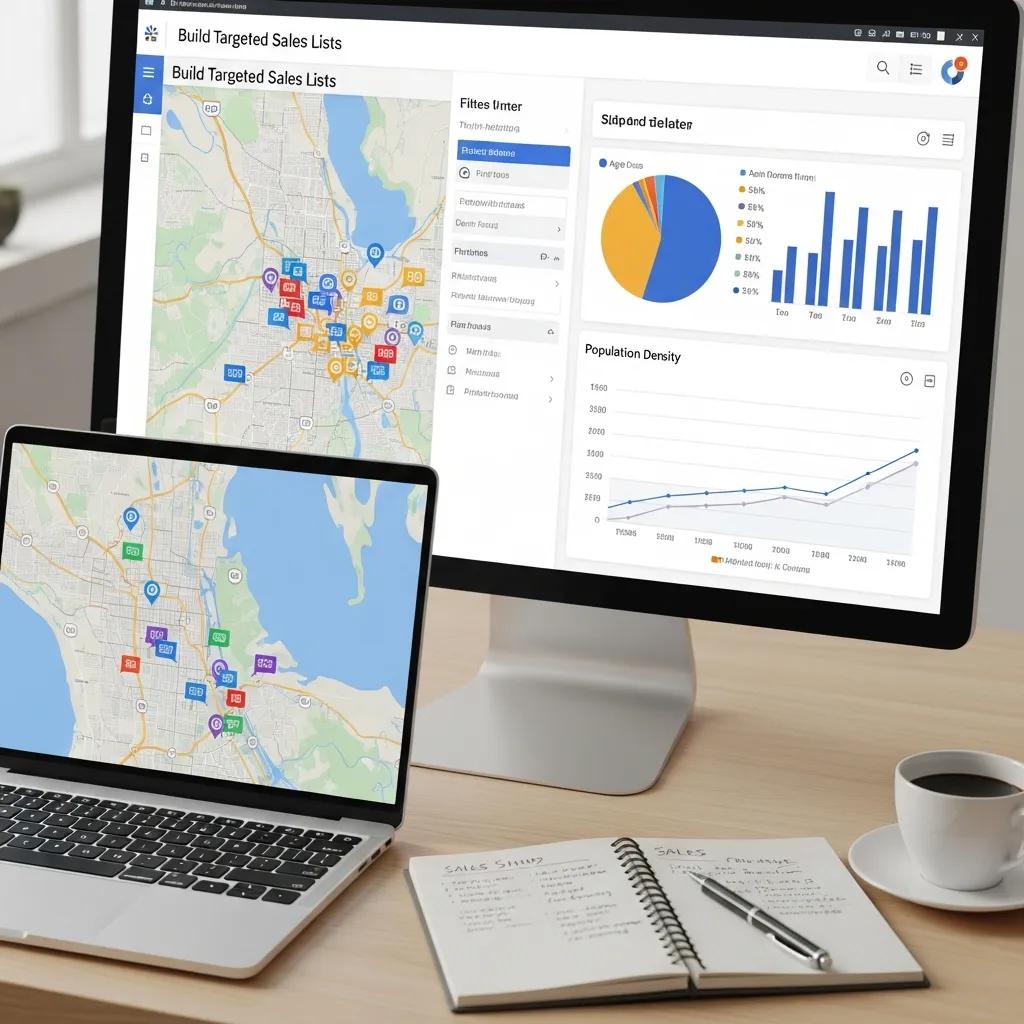
Building targeted sales lists using zip code lead generation involves several strategic steps. This process enables businesses to identify and connect with potential customers in specific geographic areas, enhancing outreach efficiency.
What Steps Are Involved in Creating Zip Code-Based Prospect Lists?
- Identify Target Demographics: Determine the characteristics of your ideal customer, including age, income, and interests.
- Gather Zip Code Data: Utilize reliable data sources to collect zip code information relevant to your target demographics.
- Segment Your List: Organize the data into segments based on geographic criteria to facilitate targeted outreach.
- Validate Your Data: Ensure the accuracy of your prospect lists by cross-referencing with multiple data sources.
How Does Companies By Zip Code Leverage Local Business Data for Precision Targeting?
Companies By Zip Code leverages local business data to enhance precision targeting by providing comprehensive insights into businesses within specific zip codes. This platform offers an all-in-one business search tool that allows users to access detailed information about local companies, including their services and contact details. By utilizing this data, businesses can create highly targeted sales lists that improve outreach efficiency and increase the likelihood of conversion.
What Strategies Optimize Sales Territory Management for Local Business Lead Generation?

How Can Sales Territory Optimization Maximize Outreach Efficiency?
Sales territory optimization maximizes outreach efficiency by ensuring that sales representatives are assigned to areas where they can be most effective. This involves analyzing customer data to identify high-potential regions and reallocating resources accordingly. By focusing on areas with the greatest potential for sales, businesses can increase their chances of success and improve overall sales performance.
Further research emphasizes the strategic importance of sophisticated territory planning for optimizing sales performance and resource allocation.
Sales Territory Planning for Geographic Coverage & Performance
ABSTRACT: AbstractSales territory planning is crucial for maximizing sales performance, distributing workload evenly among representatives, and minimizing travel expenses. Manual assignments, rule-based systems, and simple clustering algorithms alike often fall short in terms of scalability, fairness, and adaptability to market dynamics. In this paper, a comprehensive graph-based framework is introduced that treats customers, depots, and travel paths as nodes and edges of a graph structure. The model incorporates multiple key attributes, including customer value, travel distance, and sales representative capacity, to generate geographically coherent, workload-balanced territories. These territories are also aligned with strategic business objectives.
Territory Planning Algorithms: Graph-Based Sales Coverage Optimization, 2025
Which Tools Support Effective Sales Territory Definition and Management?
Several tools support effective sales territory definition and management, including customer relationship management (CRM) systems and mapping software. These tools allow businesses to visualize their territories, track performance metrics, and make data-driven decisions. By utilizing these resources, companies can enhance their sales strategies and ensure that their teams are operating at peak efficiency.
How to Use B2B Contact Lists by Location to Enhance Targeted Marketing?
What Are the Benefits of Geographic Segmentation in B2B Lead Lists?
Geographic segmentation in B2B lead lists offers several benefits, including improved targeting and higher conversion rates. By focusing on specific regions, businesses can create personalized marketing campaigns that resonate with local audiences. This targeted approach not only enhances customer engagement but also leads to more effective sales strategies.
In the context of B2B sales, effective territory management and customer location segmentation are crucial for maximizing sales potential and achieving business objectives.
B2B Territory Management & Customer Location Segmentation
In the context of Enterprise B2B sales, a company usually sells its products or services to large and diverse organizations (enterprises). Enterprise Customers often have global reach and complex hierarchical structure made up of several decision-making units. Consequently, Enterprise Customers comprise of several Customer Locations (offices, headquarters, production plants, stores etc.) to which the company sells its products or services. To maximize sales potential and other business objectives, it is suggested that each Enterprise Customer Location must be managed by the company and assigned a couple of relevant sales representatives. This activity is called Territory Management. Additionally, any company should have well-defined set of Customer Segmentation criteria that help identify the most valuable Customer Locations that need to have defined Territory Management strategy.
Dynamic Territory Management and Account Segmentation using Machine Learning: Strategies for Maximizing Sales Efficiency in a US Zonal Network, 2025
How to Integrate Geographic Lead Lists with CRM and Marketing Automation?
- Data Synchronization: Ensure that your lead lists are regularly updated and synchronized with your CRM system.
- Automated Campaigns: Set up automated marketing campaigns that target specific geographic segments based on your lead lists.
- Performance Tracking: Monitor the performance of your campaigns to identify areas for improvement and optimize future efforts.
Which Tools and Resources Facilitate Local Business Lead Generation and Outreach?
What Features Make Companies By Zip Code a Leading Geographic Lead Generation Platform?
Companies By Zip Code stands out as a leading geographic lead generation platform due to its comprehensive data offerings and user-friendly interface. The platform provides access to detailed business information, allowing users to create targeted sales lists based on specific geographic criteria. Additionally, its robust search capabilities enable businesses to find potential customers quickly and efficiently.
How Do SEO-Optimized Email Templates Improve Local Engagement?
SEO-optimized email templates improve local engagement by ensuring that marketing messages are tailored to the interests and needs of the target audience. By incorporating relevant keywords and local references, businesses can increase the likelihood of their emails being opened and read. This targeted approach not only enhances engagement but also drives higher conversion rates.
What Are Real-World Success Stories of Businesses Growing with Geographic Targeting?
How Have Companies Improved Sales Using Zip Code-Based Targeted Lists?
Many companies have improved their sales by utilizing zip code-based targeted lists. For example, a local retail business that focused its marketing efforts on specific neighborhoods saw a 20-30% increase in foot traffic and a corresponding rise in sales. By tailoring their outreach to the unique characteristics of each area, they were able to connect with customers more effectively.
What Metrics Demonstrate Increased Outreach Efficiency Through Geographic Segmentation?
Metrics that demonstrate increased outreach efficiency through geographic segmentation include engagement rates, conversion metrics, and overall sales growth. Businesses that implement targeted sales lists often report higher open and click-through rates for their marketing campaigns, leading to improved sales performance. By analyzing these metrics, companies can refine their strategies and continue to enhance their outreach efforts.
| Geographic Entity | Description | Importance |
|---|---|---|
| Zip Codes | Specific postal codes that define geographic areas | Essential for targeted marketing and outreach |
| Census Tracts | Small, relatively permanent statistical subdivisions of a county | Provides demographic insights for market segmentation |
| Demographic Data | Information about the characteristics of a population | Helps in understanding customer needs and preferences |