

- Home
- Business Services
- Blog
- Contact Us
CRM Systems for Small Businesses | Customer Relationship Management
- Uncategorized
-
May 09
- Share post

CRM Systems for Small Businesses: Your Complete Guide to Customer Relationship Management
In the competitive landscape of small businesses, effective customer relationship management (CRM) is crucial for success. CRM systems streamline processes, enhance customer interactions, and ultimately drive sales growth. This comprehensive guide will explore the significance of CRM systems for small businesses, detailing their essential features, benefits, and how to choose the right software. Many small businesses struggle with managing customer data and relationships effectively, leading to missed opportunities and inefficiencies. Implementing a robust CRM system can provide a structured solution to these challenges, ensuring that businesses can nurture leads and retain customers effectively. We will cover the definition of CRM, its essential features, the benefits of implementation, tips for selecting the best software, and the latest trends in CRM for 2024.
What is CRM and Why Do Small Businesses Need It?
Customer Relationship Management (CRM) refers to the strategies and technologies that businesses use to manage interactions with current and potential customers. CRM systems help small businesses organize customer information, track interactions, and automate various processes, leading to improved customer satisfaction and loyalty. By centralizing customer data, CRM systems enable businesses to understand their customers better and tailor their services accordingly.
The need for CRM in small businesses is underscored by the competitive edge it provides. With effective CRM systems, small businesses can enhance their efficiency, gain valuable insights into customer behavior, and ultimately drive sales growth. This competitive advantage is essential in a market where customer expectations are continually evolving.
What is Customer Relationship Management and How Does It Help SMBs?
Customer Relationship Management encompasses a range of practices and technologies that help businesses manage customer interactions throughout the customer lifecycle. For small and medium-sized businesses (SMBs), CRM systems can significantly enhance operational efficiency by automating routine tasks, such as data entry and follow-up communications. This automation allows businesses to focus on building relationships rather than getting bogged down in administrative tasks.
Moreover, CRM systems provide valuable insights into customer preferences and behaviors, enabling SMBs to tailor their marketing strategies effectively. For instance, by analyzing customer purchase history, businesses can identify trends and personalize their offerings, leading to increased customer satisfaction and loyalty.
How Can CRM Systems Give Small Businesses a Competitive Edge?
Implementing a CRM system can provide small businesses with a significant competitive edge by streamlining operations and enhancing customer engagement. For example, CRM systems can automate marketing campaigns, allowing businesses to reach their target audience more effectively. Additionally, by providing a centralized database of customer information, CRM systems enable businesses to respond to customer inquiries promptly and accurately.
Research further emphasizes how automation, particularly through CRM systems, is a cornerstone for enhancing digital marketing efficiency and achieving business growth.
CRM Automation for Small Business Efficiency & Growth
Automation technologies, such as customer relationship management (CRM) systems, email marketing automation, and social media management tools, allow small enterprises to reach their target audience more effectively while saving time and resources. Through an in-depth analysis of case studies and real-world applications, this research highlights how automation can assist in lead generation, customer retention, and data-driven decision-making.
Implementation of Automation Technology in Enhancing Digital Marketing Efficiency for Small Businesses, SSD Waramena, 2025
Case studies have shown that businesses using CRM systems experience improved customer retention rates and increased sales. By leveraging customer insights, small businesses can create targeted marketing strategies that resonate with their audience, ultimately leading to higher conversion rates and customer loyalty.
What Are the Essential Features of Small Business CRM Software?
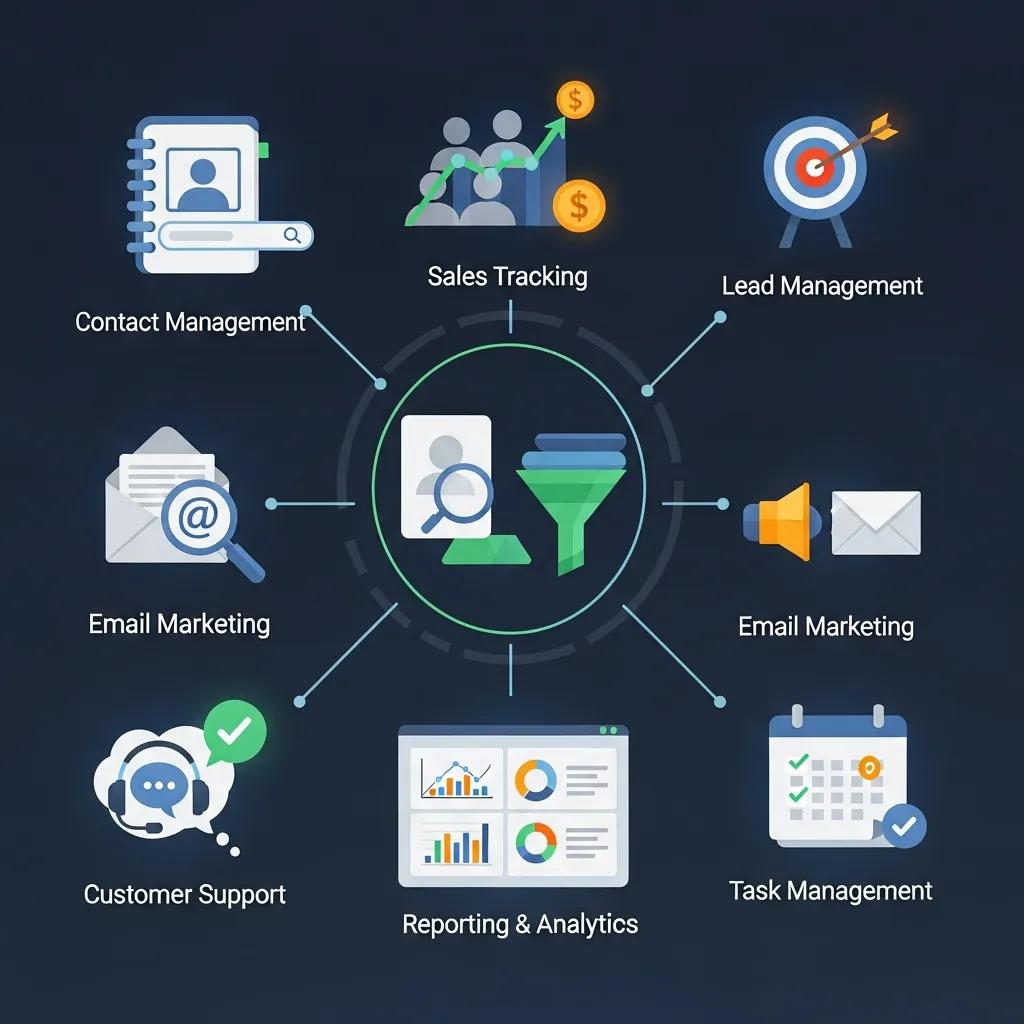
When selecting a CRM system, small businesses should consider several essential features that can enhance their customer management processes. These features include contact management, sales pipeline tracking, and marketing automation tools.
How Does Contact and Lead Management Improve Customer Relationships?
Effective contact and lead management are critical components of any CRM system. By organizing customer information and tracking interactions, businesses can ensure that no lead is overlooked. This systematic approach allows for timely follow-ups and personalized communication, which are vital for nurturing relationships.
Statistics indicate that businesses with robust contact management systems see a significant increase in customer engagement. By maintaining detailed records of customer interactions, businesses can tailor their communications to meet individual needs, fostering stronger relationships and enhancing customer satisfaction.
What Sales Pipeline and Marketing Automation Tools Should SMBs Look For?
Sales pipeline tracking and marketing automation tools are essential for small businesses looking to optimize their sales processes. A well-defined sales pipeline allows businesses to visualize their sales process, identify bottlenecks, and forecast revenue more accurately.
Marketing automation tools enable businesses to streamline their marketing efforts, from email campaigns to social media management. By automating these processes, small businesses can save time and resources while ensuring consistent communication with their audience. Key tools to look for include email marketing integrations, lead scoring capabilities, and analytics dashboards to measure campaign effectiveness.
What Are the Benefits of Implementing CRM for Small Businesses?

Implementing a CRM system offers numerous benefits for small businesses, including enhanced customer retention, increased sales, and improved operational efficiency.
How Does CRM Enhance Customer Retention and Loyalty?
CRM systems play a pivotal role in enhancing customer retention and loyalty by providing businesses with the tools to understand and meet customer needs effectively. By analyzing customer data, businesses can identify trends and preferences, allowing them to tailor their offerings and communications accordingly.
Personalization strategies, such as targeted marketing campaigns and loyalty programs, can be easily implemented through CRM systems. These strategies foster a sense of connection between the business and its customers, leading to increased loyalty and repeat business.
In What Ways Does CRM Increase Sales and Operational Efficiency?
CRM systems contribute to increased sales by streamlining the sales process and providing sales teams with the insights they need to close deals effectively. By automating routine tasks and providing real-time data, CRM systems enable sales teams to focus on building relationships and closing sales rather than administrative duties.
Metrics show that businesses that implement CRM systems often experience a significant increase in sales productivity. By tracking customer interactions and sales activities, businesses can identify high-performing strategies and replicate them across their teams, leading to improved overall performance.
How to Choose the Best CRM Software for Your Small Business?
Choosing the right CRM software is crucial for maximizing its benefits. Small businesses should consider several factors when selecting a CRM system, including scalability, ease of use, and cost.
What Factors Should SMBs Consider When Selecting a CRM?
When selecting a CRM system, small businesses should evaluate their specific needs and goals. Key factors to consider include the system’s ability to integrate with existing tools, user-friendliness, and the level of customer support provided. Additionally, businesses should assess whether the CRM can scale as their operations grow, ensuring that it remains a valuable asset over time.
Further research into CRM selection criteria for small and medium-sized enterprises underscores the critical importance of system functionality and data security in making an optimal purchasing decision.
Choosing CRM: Key Selection Criteria for SMEs
The purpose of this paper was to conduct an investigation on criteria of Enterprise Resources Planning (ERP)/Customer Relations Management (CRM) systems selection used by Small and Medium-sized Enterprises (SMEs) in Poland. The main goal was to define the key selection criteria that should be used to ensure the optimal decision of the purchase of the system. The choice of the right ERP and/or CRM system can significantly improve their operational efficiency and competitiveness. The main conclusion of this study is that two most important selection criteria are: system functionality and the ability to ensure data security.
Key criteria of ERP/
CRM systems selection in SMEs in Poland, M Cieciora, 2020
Customization options are also essential, as they allow businesses to tailor the CRM to their unique processes and workflows. A flexible CRM system can adapt to changing business needs, making it a worthwhile investment.
What Are the Differences Between Free and Affordable CRM Solutions?
Small businesses often face the dilemma of choosing between free and affordable CRM solutions. While free CRM options may seem appealing, they often come with limitations in features and support. On the other hand, affordable CRM solutions typically offer a more comprehensive set of features, including advanced analytics, automation tools, and customer support.
A comparison of features can help businesses determine the best fit for their needs. For instance, while a free CRM may provide basic contact management, an affordable solution may include marketing automation and sales pipeline tracking, which can significantly enhance operational efficiency.
What Are the Latest CRM Trends for Small Businesses in 2024?
As technology continues to evolve, so do CRM systems. Small businesses must stay informed about the latest trends to leverage CRM effectively.
How Is AI Powering Next-Generation CRM Systems?
Artificial intelligence (AI) is revolutionizing CRM systems by providing advanced analytics and automation capabilities. AI-powered CRM systems can analyze vast amounts of customer data to identify patterns and trends, enabling businesses to make data-driven decisions.
These systems can also automate routine tasks, such as data entry and customer follow-ups, freeing up valuable time for sales teams. As AI technology continues to advance, small businesses can expect even more sophisticated CRM solutions that enhance customer engagement and operational efficiency.
Why Are Mobile-First and Omnichannel Engagement Critical for SMBs?
In today’s digital landscape, mobile-first and omnichannel engagement strategies are essential for small businesses. With more customers accessing information through mobile devices, CRM systems must be optimized for mobile use to ensure seamless customer interactions.
Omnichannel engagement allows businesses to connect with customers across various platforms, providing a consistent experience regardless of the channel. This approach not only enhances customer satisfaction but also increases the likelihood of conversions, as customers can engage with businesses in their preferred manner.
Where Can Small Businesses Find Local CRM Providers and Support?
Finding the right CRM provider is crucial for small businesses looking to implement effective customer management solutions. Local providers can offer personalized support and insights into the specific needs of the local market.
How Does Connecting with Local CRM Experts Benefit Small Businesses?
Connecting with local CRM experts can provide small businesses with tailored solutions that address their unique challenges. Local providers often have a better understanding of the regional market and can offer insights that larger, national providers may overlook.
Additionally, local support can enhance the implementation process, ensuring that businesses can maximize the benefits of their CRM systems from the outset. Personalized service can lead to quicker resolutions of issues and a more effective use of the CRM system.
What Resources Does Companies By Zip Code Offer for Finding Local CRM Services?
Companies By Zip Code operates with the primary goal of connecting users with local businesses and providing various business services. They offer a directory of local CRM providers, enabling small businesses to find suitable solutions tailored to their needs. This resource can be invaluable for businesses seeking to implement CRM systems that align with their operational goals and customer engagement strategies.
| Feature | Description | Benefit |
|---|---|---|
| Contact Management | Organizes customer data and interactions | Improves customer engagement |
| Sales Pipeline Tracking | Visualizes sales process stages | Enhances forecasting accuracy |
| Marketing Automation | Automates marketing campaigns | Saves time and increases reach |
This table highlights essential CRM features that can significantly enhance small business operations, leading to improved customer relationships and increased sales.
Small businesses that leverage CRM systems effectively can expect to see substantial improvements in customer satisfaction, operational efficiency, and overall business performance. By understanding the essential features, benefits, and trends in CRM, businesses can make informed decisions that drive growth and success.