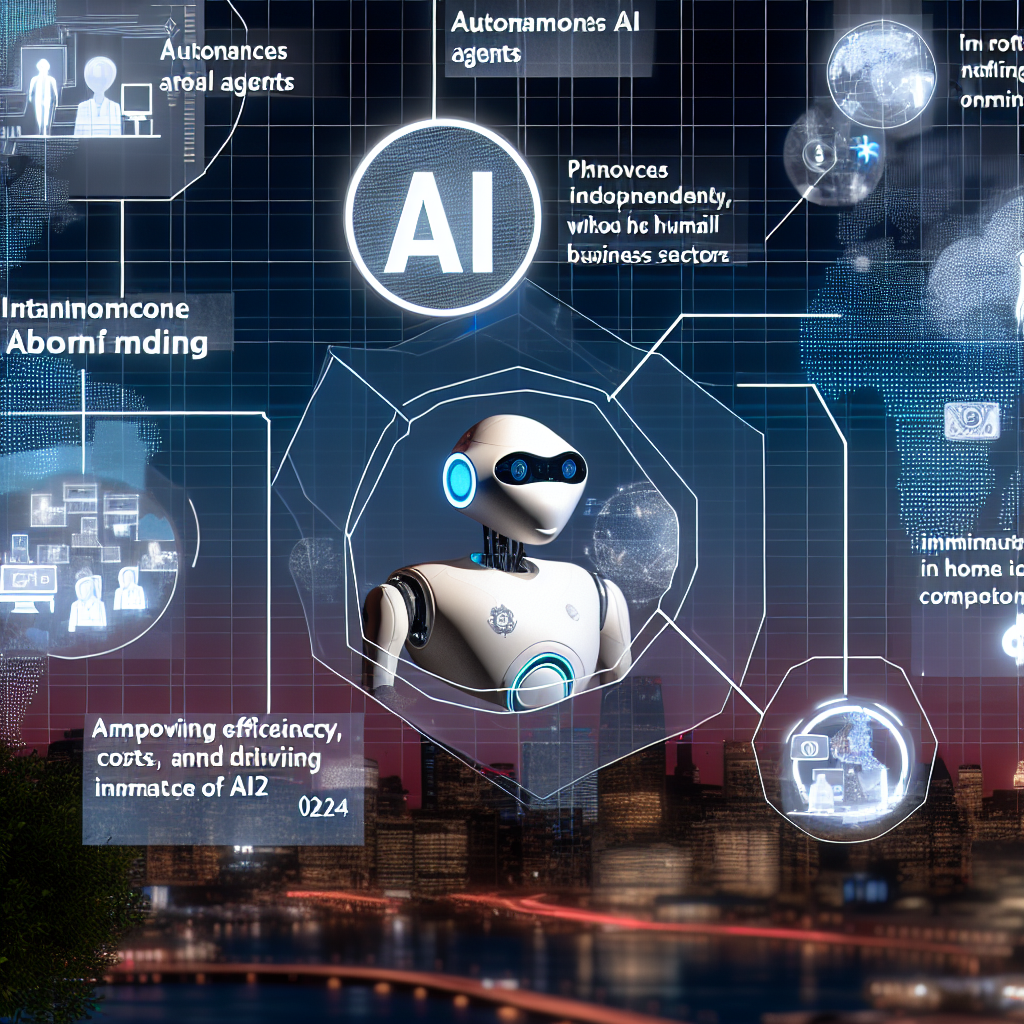
Understanding Autonomous AI Agents
Autonomous AI agents are systems capable of performing tasks without human intervention, leveraging machine learning and data analysis to make decisions. These agents can operate in real-time, adapting to changing environments and user needs, which significantly enhances efficiency across various business functions.
For instance, in the customer service sector, AI agents can handle inquiries and resolve issues instantly, providing 24/7 support. Companies implementing these agents have reported increased customer satisfaction and reduced operational costs, showcasing the transformative potential of AI technology.
Applications of AI Agents in Different Industries
AI agents are being deployed across numerous sectors, including healthcare, finance, and retail, each benefiting from tailored applications. In healthcare, AI agents assist in diagnosis and patient management, while in finance, they streamline trading and risk assessment processes.
Retailers use AI agents for inventory management and personalized marketing, analyzing consumer behavior to enhance shopping experiences. By integrating these technologies, businesses across industries are unlocking new levels of productivity and innovation.
The Future of Work with AI Agents
The integration of autonomous AI agents into the workplace is reshaping job roles and workflows. As these agents take over repetitive tasks, employees can focus on more strategic and creative initiatives, leading to a more engaged and productive workforce.
Moreover, companies are increasingly investing in training programs to equip staff with the skills needed to collaborate with AI agents effectively. This shift not only enhances job satisfaction but also prepares organizations for a future where human-AI collaboration is the norm.
Challenges and Considerations in Implementing AI Agents
While the benefits of autonomous AI agents are compelling, businesses must also navigate challenges such as data privacy, ethical considerations, and integration with existing systems. Ensuring that AI solutions comply with regulations and ethical standards is crucial for maintaining consumer trust.
Additionally, organizations need to consider the potential displacement of jobs and develop strategies to reskill employees. Addressing these challenges head-on will be essential for successful AI adoption and maximizing the technology's potential in business.