

How Generative AI Is Transforming the Future of Small Business in 2025
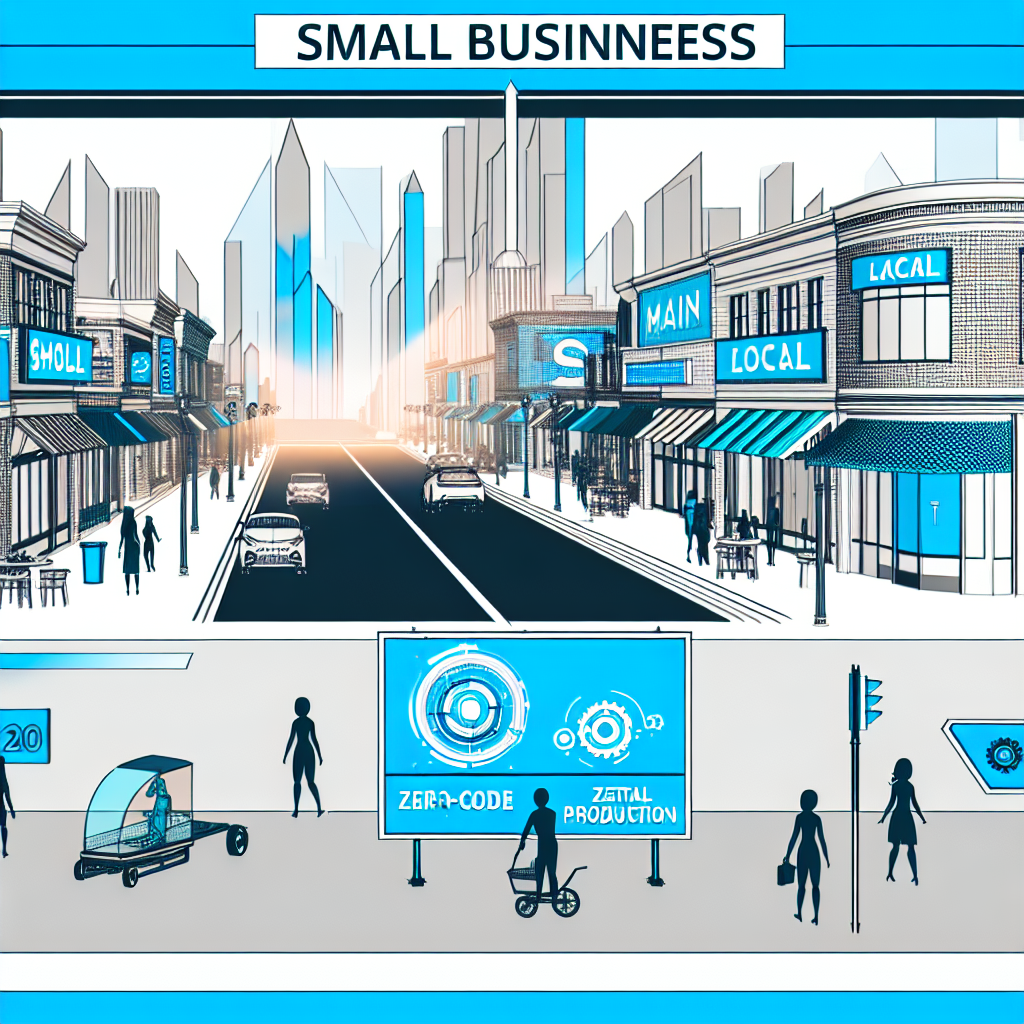
The world of small business is undergoing a silent revolution—and at the center of it is generative AI.
From personalized marketing to automated operations, generative AI tools like ChatGPT, Midjourney, and Google’s Gemini are unlocking capabilities once reserved for enterprise giants. Small businesses in 2025 are leveraging these tools to compete on a global scale, drive innovation, and radically reduce overhead. Welcome to the era where your local bakery, bookstore, or consulting agency runs on AI.
Table of Contents
- Introduction to Generative AI in Small Business
- The Rise of AI-Powered Entrepreneurship
- Real-World Use Cases Transforming Local Businesses
- Key Platforms Fueling the Small Biz AI Boom
- Risks, Challenges & AI Readiness Concerns
- Future-Proofing: Predictions for the Next 5 Years
- Strategies for Small Businesses to Adopt AI Today
- Final Thoughts: Main Street Meets Machine Learning
1. Introduction to Generative AI in Small Business
Generative AI refers to tools that can create new content—text, images, video, code, and more—by learning from vast amounts of data. Over the past 24 months, the rise of tools like OpenAI’s ChatGPT, Microsoft’s Copilot, Google’s Gemini, and a wave of AI-as-a-service platforms has democratized access to this power.
Small businesses, previously hampered by limited budgets and manpower, are now wielding AI to:
- Generate marketing content at scale
- Analyze customer data for hyper-personalization
- Automate daily business operations
- Build websites, chatbots, and even products—without writing code
With AI tools increasingly affordable and intuitive, the barrier between small and scalable has never been thinner.
2. The Rise of AI-Powered Entrepreneurship
A recent McKinsey report (2024) reveals that small to mid-sized businesses (SMBs) using generative AI in core functions see an average productivity boost of 35%. Meanwhile, Shopify predicts that by the end of 2025, over 70% of its merchants will use at least one AI-powered feature daily.
Entrepreneurs are no longer just business owners—they are AI curators. A solopreneur can now outsource sales copywriting to Jasper.ai, customer service to an AI chatbot like Tidio AI, and marketing strategy generation to tools like Copy.ai or Jasper.
This explosion is not happening in silos. On platforms like Reddit (r/Entrepreneur, r/SmallBusiness), Facebook Groups, and TikTok, SMB owners are going viral by sharing how generative AI transformed their operations—often within weeks of adoption.
3. Real-World Use Cases Transforming Local Businesses
Marketing & Branding:
- Bakery in Brooklyn: using Midjourney to generate unique Instagram visuals featuring stylized cake art, which doubled their engagement in 3 months.
- Freelance Agencies: Creators using ChatGPT for social media calendars, email newsletters, and value-based blog posts tailored to client brands.
- Retail Shops: Integrating Canva’s Magic Write for instant product descriptions and AdCreative.ai for converting Facebook ads.
Operations & Automation:
- AI Scheduling: Salons, yoga studios, and coaches using Motion or Reclaim.ai to automate daily operations and bookings.
- 24/7 Customer Support: Local ecommerce stores deploying ChatGPT-driven bots to handle FAQs, returns, and shipping queries.
Content & Product Development:
- Authors and Coaches: Producing e-books, course materials, or scripts using Claude or Gemini Pro with a fraction of past effort.
- Real Estate Firms: Using AI voiceovers and visuals to create property tours in seconds.
4. Key Platforms Fueling the Small Biz AI Boom
As the generative AI wave grows, so do the tools tailor-made for SMBs. Here are a few shaping the landscape:
- OpenAI’s ChatGPT (with GPT-4 Turbo): Personal assistant, content creator, and operations optimizer in one.
- Canva’s Magic Studio: A bridge between design and AI that even non-creatives can master.
- Jasper AI: Marketing content creation targeted explicitly at smaller teams and entrepreneurs.
- QuickBooks Smart Assistant: AI accounting prompts and bookkeeping automation for small businesses.
- Zapier with AI: Workflow automation for everything from emails to CRMs to e-commerce.
5. Risks, Challenges & AI Readiness Concerns
Data Privacy & Ethics:
AI-generated content raises questions of intellectual property, plagiarism, and customer data misuse. Small businesses must understand how these tools work and comply with data protection laws like GDPR or CCPA.
Reliance on Third-Party Tools:
Over-dependency on platforms like OpenAI or Google could turn into a bottleneck if prices surge or models change.
Learning Curve:
Although more intuitive now, effective AI usage still requires prompt engineering, critical evaluation, and industry-tailored adaptation. A bad prompt can equal bad results—and for regulated industries, even legal risk.
6. Future-Proofing: Predictions for the Next 5 Years
- AI Micro-Consultants: Just as websites became standard in the 2000s, every small business in 2030 may have a custom-trained AI “staff member.”
- Hyperlocal Personalization: AI-generated promotions, offers, and social media content personalized down to individual customers within zip codes.
- AI Business Licenses: Expect regulatory frameworks that treat AI outputs like business assets or IP.
- Voice-first AI Commerce: Tools like ElevenLabs and HeyGen will power voice-driven local commerce where customers engage and transact by talking to avatars.
- Zero-Code Entrepreneurship: Entire business models could launch—including product design, marketing, support, and distribution—without writing a single line of code.
7. Strategies for Small Businesses to Adopt AI Today
- Audit Your Workflow: Identify repetitive tasks and test tools that automate them—content writing, scheduling, data entry.
- Invest in AI Literacy: Upskill with tutorials from YouTube creators like Matt Wolfe, or enroll in mini-courses from Futuretools.io.
- Start Small, Scale Fast: Begin with one core process (e.g., marketing copy), and expand to customer service, then analytics.
- Test Multiple Tools: Don’t get locked into one brand—experiment with Gemini, Claude, or Perplexity based on your niche.
- Use AI Prompt Libraries: Templates like PromptHero or FlowGPT make non-techies look like prompt engineers.
- Join AI Communities: Reddit’s r/SmallBusiness and Twitter’s #AIforBusiness reveal cutting-edge hacks and partnerships.
8. Final Thoughts: Main Street Meets Machine Learning
Generative AI is more than a tech stack—it’s a cultural shift. It levels the playing field by giving under-funded, under-resourced businesses the power to create, scale, and compete.
For the plumber in Pittsburgh, the florist in San Jose, or the yoga instructor in Minneapolis, AI isn’t some distant innovation—it’s now part of the daily toolkit. And as AI models continue improving—and regulations work to catch up—those who act early will lead their industries tomorrow.
It’s not just about disruption—it’s about empowerment. In the AI-powered economy of 2025, it’s not size that matters, but speed, creativity, and adaptability. Generative AI is already making that possible—and we’re just getting started.
Ready to put AI to work in your zip code? The future is hyper-local, and its engine is artificial intelligence.
Stay tuned on CompaniesByZipcode.com for more on AI-powered commerce, community innovation, and the businesses redefining their future with technology.