

- Home
- Business Services
- Blog
- Contact Us
Local Business Customer Service Excellence | Building Trust and Reputation
- Uncategorized
-
Apr 23
- Share post

Local Business Customer Service Excellence: Strategies for Building Trust and Reputation
In today’s competitive marketplace, local businesses must prioritize customer service excellence to build trust and enhance their reputation. This article explores effective strategies that local businesses can implement to foster strong relationships with their customers. By focusing on transparency, consistent service delivery, and proactive reputation management, businesses can create a loyal customer base that not only returns but also refers others. The importance of customer satisfaction cannot be overstated, as it directly impacts a business’s bottom line. This guide will cover how local businesses can build customer trust, manage their reputation, improve service quality, drive customer loyalty, and leverage customer service as a differentiator.
How Can Local Businesses Build Customer Trust Effectively?
Building customer trust is essential for local businesses aiming to establish a loyal clientele. Trust is cultivated through transparency, consistent service delivery, and a commitment to customer satisfaction. When customers feel confident in a business’s integrity and reliability, they are more likely to return and recommend the service to others.
What Are the Key Principles of Transparent and Honest Service?
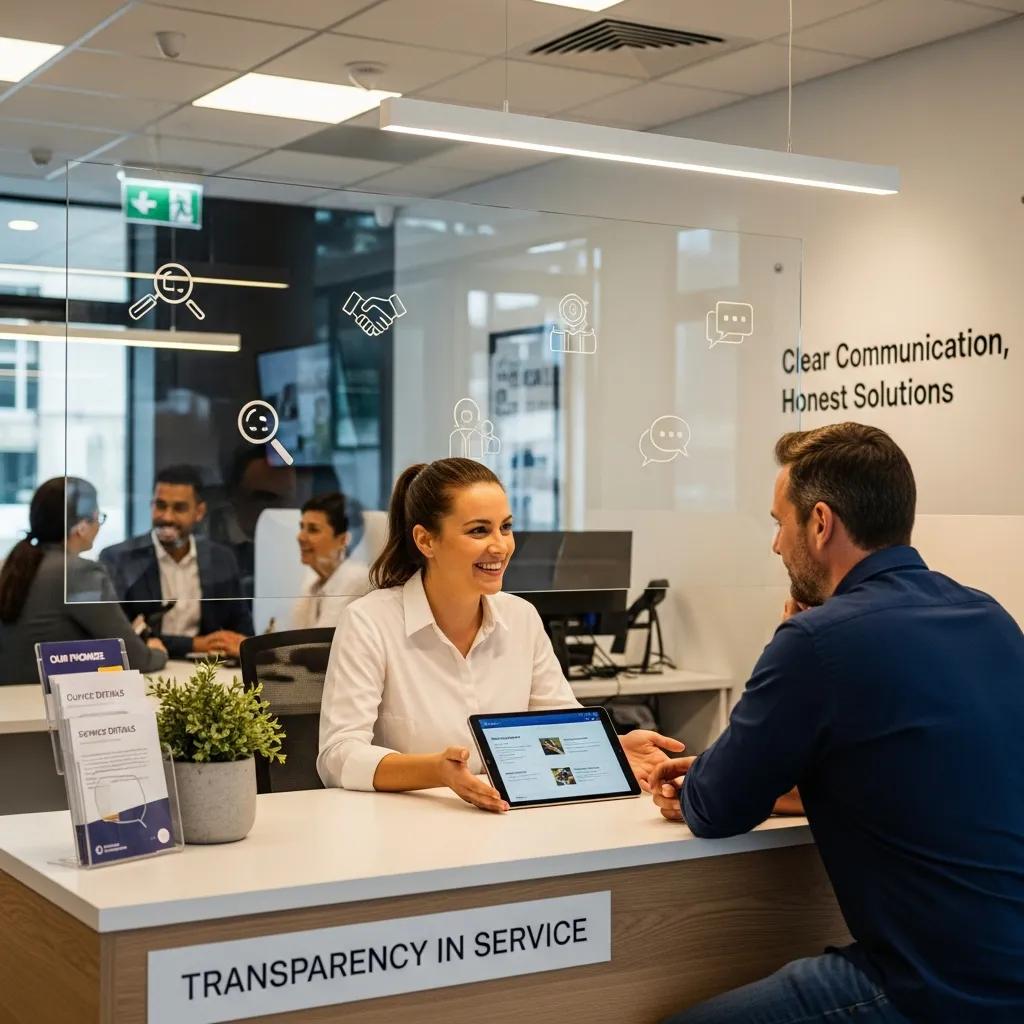
Transparency in customer service involves clear communication and honesty about products and services. This includes providing accurate information regarding pricing, service expectations, and potential outcomes. For instance, businesses can enhance transparency by:
- Clear Pricing: Displaying prices openly to avoid hidden fees.
- Service Descriptions: Offering detailed descriptions of services to set realistic expectations.
- Open Communication: Encouraging customers to ask questions and providing prompt, honest answers.
These practices not only build trust but also foster a positive customer experience, leading to increased loyalty.
How Do Service Guarantees and Consistent Delivery Enhance Trust?
Service guarantees and consistent delivery are critical components in building customer trust. A service guarantee assures customers that they will receive a certain level of quality, which can significantly enhance their confidence in a business. For example, offering a satisfaction guarantee can encourage customers to try a service without fear of loss.
Research further elaborates on how well-designed service guarantees can significantly impact operations, service quality, and overall business performance.
Service Guarantees: Boosting Quality & Performance
Much has been written about service guarantees and their various proposed benefits. Following the literature, many writers regard a guarantee as a tool to jump-start quality improvements and/or see in them the ultimate way to gain a competitive edge. The objective of this paper is to consolidate our understanding of the working of guarantees. Based on a literature review and an exploratory study, a set of explicit propositions on the impacts of service guarantees was advanced. These propositions were then integrated into a single conceptual model. The model shows the impacts of well-designed guarantees on operations and service quality, consumer behavior, and finally on business performance.
Development of a service guarantee model, J Wirtz, 1998
Moreover, consistent delivery of services reinforces trust. When customers receive the same high-quality service every time, they are more likely to return. Businesses can achieve this by:
- Standardizing Procedures: Implementing consistent service protocols.
- Training Employees: Ensuring staff are well-trained to deliver quality service.
- Monitoring Performance: Regularly assessing service delivery to maintain standards.
What Are Best Practices for Managing Local Business Reputation?
Managing a local business’s reputation is crucial in today’s digital age, where online reviews and social media can significantly influence public perception. A proactive approach to reputation management can help businesses maintain a positive image and address any negative feedback effectively.
How Can Online Reviews and Social Media Engagement Shape Reputation?
Online reviews and social media engagement play a pivotal role in shaping a business’s reputation. Positive reviews can attract new customers, while negative reviews can deter potential clients. To leverage online reviews effectively, businesses should:
- Encourage Reviews: Ask satisfied customers to leave positive feedback on platforms like Google and Yelp.
- Engage on Social Media: Actively respond to comments and messages to show customers that their opinions matter.
- Monitor Feedback: Regularly check review sites to stay informed about customer sentiments.
By engaging with customers online, businesses can build a community and enhance their reputation.
What Are Effective Ways to Handle Negative Feedback Locally?
Handling negative feedback is an essential aspect of reputation management. When addressed properly, negative reviews can be transformed into opportunities for improvement. Businesses should consider the following strategies:
- Respond Promptly: Address negative reviews quickly to show that the business values customer feedback.
- Apologize and Offer Solutions: Acknowledge the issue and provide a resolution to demonstrate commitment to customer satisfaction.
- Learn from Feedback: Use negative feedback as a learning tool to improve services and prevent future issues.
By effectively managing negative feedback, businesses can mitigate damage to their reputation and even turn dissatisfied customers into loyal advocates.
How Can Local Businesses Improve Service Quality to Boost Customer Satisfaction?
Improving service quality is vital for enhancing customer satisfaction. High-quality service not only meets customer expectations but also exceeds them, leading to repeat business and referrals.
Indeed, strategic approaches to service quality are increasingly recognized as crucial for not only customer satisfaction but also for driving profit and long-term loyalty.
Strategic Service Quality: Driving Profit & Loyalty
Service quality is an essential strategy for success and survival in today’s competitive environment. Earlier discussions emphasized what service quality meant to customers and how to develop strategies to meet customer expectations. More recently, the focus has shifted to understanding the impact of service quality on profit and other financial outcomes of the organization. Lowering customer defection rates can be profitable to companies, at the same time lowering employee turnover and improving their satisfaction and loyalty can also reduce customer defection and maintain or increase profits. The purpose of this paper is to put forth an argument that to measure customer service quality is not only an important strategic approach, but is a critical and intertwined link to organizational commitment, communication, and employee satisfaction by improving and maintaining high standards of consistent service quality delivery. This strategic approach pulls together many previously tested models into a single workable assessment and feedback tool, with a particular focus on employee training, by establishing a strategic and measurable benchmarking index for continual monitoring and operational improvement.
A strategic approach to managing customer service quality, 2011
What Role Does Employee Training Play in Service Excellence?
Employee training is a cornerstone of service excellence. Well-trained employees are equipped with the skills and knowledge necessary to provide exceptional service. Training programs should focus on:
- Customer Interaction: Teaching employees how to engage positively with customers.
- Product Knowledge: Ensuring staff are knowledgeable about the services offered.
- Problem-Solving Skills: Training employees to handle customer complaints effectively.
Investing in employee training leads to improved service quality and higher customer satisfaction.
How Does Personalized Customer Experience Increase Satisfaction?
Personalization enhances the customer experience by making interactions more relevant and meaningful. Businesses can increase satisfaction through personalized service by:
- Using Customer Data: Tailoring services based on customer preferences and past interactions.
- Offering Customized Solutions: Providing options that cater to individual customer needs.
- Building Relationships: Taking the time to know customers and their preferences.
Personalized experiences create a sense of value for customers, encouraging loyalty and repeat business.
What Strategies Drive Customer Loyalty and Retention for Small Businesses?
Customer loyalty is essential for the long-term success of small businesses. Implementing effective strategies can help retain customers and encourage them to return.
How Do Loyalty Programs and Customer Feedback Mechanisms Support Retention?
Loyalty programs incentivize repeat business by rewarding customers for their continued patronage. Effective loyalty programs can include:
- Point Systems: Customers earn points for purchases that can be redeemed for discounts or free services.
- Exclusive Offers: Providing special promotions to loyal customers.
- Referral Bonuses: Rewarding customers for referring new clients.
Additionally, gathering customer feedback through surveys can help businesses understand customer needs and preferences, allowing for continuous improvement.
Why Is Community Engagement Vital for Local Business Growth?

Community engagement fosters strong relationships between businesses and their local communities. By participating in community events and supporting local causes, businesses can enhance their visibility and reputation. Strategies for community engagement include:
- Sponsoring Local Events: Supporting community events to build goodwill.
- Collaborating with Other Businesses: Partnering with local organizations for mutual benefit.
- Volunteering: Encouraging employees to participate in community service.
Engaging with the community not only strengthens customer loyalty but also enhances the business’s reputation as a community-oriented establishment.
How Can Local Businesses Leverage Customer Service to Differentiate Themselves?
Exceptional customer service can serve as a powerful differentiator in a crowded marketplace. Businesses that prioritize customer service can stand out from competitors and attract more customers.
What Are Proven Customer Service Strategies That Build Competitive Advantage?
To build a competitive advantage through customer service, businesses should implement strategies such as:
- Empowering Employees: Allowing staff to make decisions that enhance customer satisfaction.
- Creating a Customer-Centric Culture: Fostering an environment where customer needs are prioritized.
- Utilizing Technology: Implementing tools that streamline customer interactions and improve service efficiency.
These strategies can help businesses create memorable experiences that set them apart from competitors.
How Does Exceptional Service Influence Word-of-Mouth and Referrals?
Exceptional customer service leads to positive word-of-mouth and referrals, which are invaluable for local businesses. Satisfied customers are more likely to share their experiences with friends and family, driving new business. To encourage referrals, businesses can:
- Ask for Referrals: Encourage happy customers to refer others.
- Provide Incentives: Offer discounts or rewards for successful referrals.
- Show Appreciation: Thank customers for their referrals to reinforce positive behavior.
By focusing on exceptional service, businesses can create a cycle of positive referrals that contribute to growth.
How Can Local Businesses Measure and Monitor Customer Service Excellence?
Measuring and monitoring customer service excellence is essential for continuous improvement. Businesses need to establish metrics that reflect service quality and customer satisfaction.
The importance of metrics like the Net Promoter Score (NPS) in gauging customer loyalty and potential for business growth is widely supported by research.
NPS: Driving Customer Loyalty and Business Growth
If we look at the increasing competition and market growth in every field especially in the professional services industry, customers have many choices, which puts organizations in a dilemma to find out what makes customers loyal to the company. People tend to tell negative stories more than positive ones, so understanding and mobilizing Promoters is critical to success. Net Promoter Score (NPS) is used in companies to measure a customer’s desire to recommend a company’s overall product or service to their friends or colleagues. NPS reflects customer satisfaction & has been shown to be an indicator of business growth potential.
Analysis of the impact of Net Promoter Score on financial performance with customer loyalty as mediation, 2023
What Metrics Indicate High Service Quality and Customer Satisfaction?
| Metric | Description | Value |
|---|---|---|
| Customer Satisfaction Score (CSAT) | Measures customer satisfaction with a specific interaction | High |
| Net Promoter Score (NPS) | Gauges customer loyalty and likelihood to recommend | High |
| First Response Time | Time taken to respond to customer inquiries | Low |
How Can Businesses Use Feedback and Reviews to Continuously Improve?
Feedback and reviews are critical for identifying strengths and weaknesses in service delivery. Businesses can utilize feedback by:
- Analyzing Trends: Identifying common themes in customer feedback to address recurring issues.
- Implementing Changes: Making adjustments based on customer suggestions to enhance service quality.
- Communicating Improvements: Informing customers about changes made in response to their feedback.
By actively using feedback, businesses can foster a culture of continuous improvement that enhances customer satisfaction and loyalty.